
Research and Projects
Center for Anthropological Services
Archaeological survey of Mower County, Minnesota

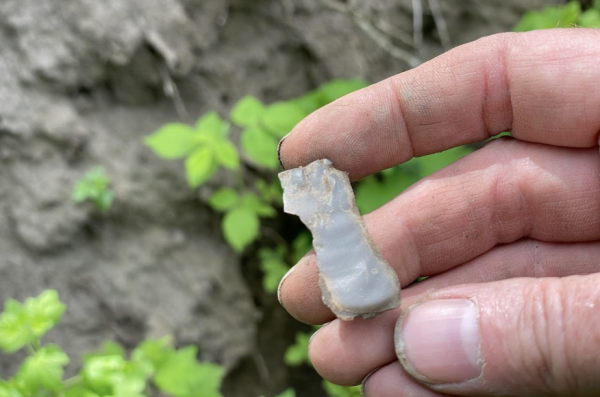
Grand Meadow Chert Quarry/Wanhi Yukan GPR Pilot Study
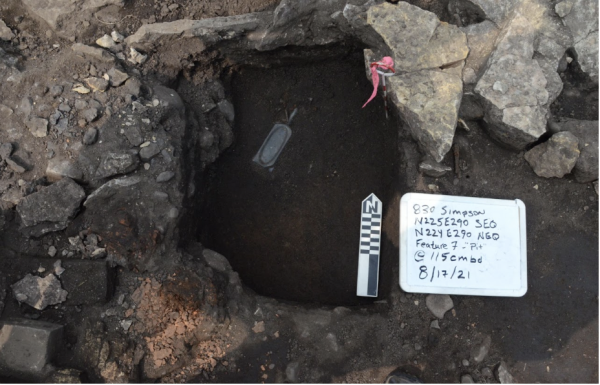
Mountain Iron Cemetery Project

The Center for Anthropological Services is currently under contract to the Minnesota Department of Natural Resources, Division of Lands and Minerals to develop a plan to address risks to a late 19th to early 20th century cemetery posed by the erosion of a disused open pit mine. Watch the presentation at left to learn more about the project, or view the transcript below.
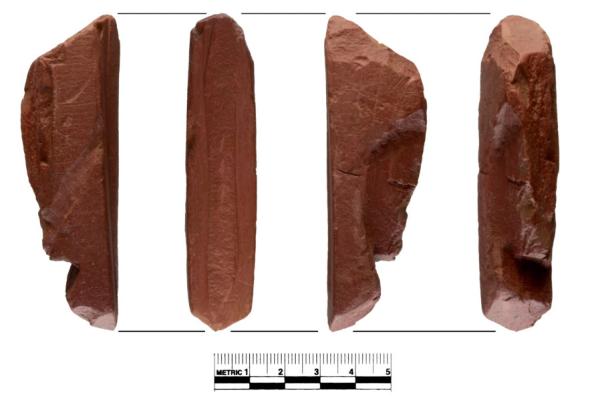
Red Rock Ridge Research Group
Hamline History Project
Hamline's Legacy Collections
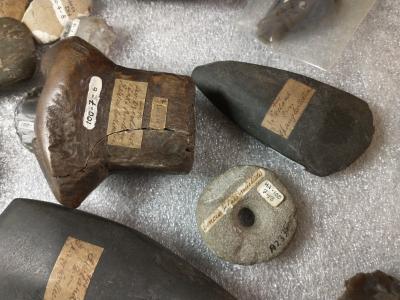
Hamline University possesses several legacy archaeological collections, which are older collections of artifacts that do not meet modern curation standards. Hamline's legacy collections include some that are more complex to deal with: African and European artifacts deaccessioned by the Minnesota Historical Society in the 1960s, collections assembled by individuals and donated to the University, and items with no associated information at all. Some of the collections that were donated to Hamline include one assembled during the late 1980s, another that was possibly assembled during the early 1970s, and a third in the 1930s. Hamline also holds some material collected by Jacob Brower and N. H. Winchell.
One of these collections is the Farley Collection, which was donated to the University by Malcolm Fisk Farley, who graduated from Hamline in 1921. Farley was a professor of English Literature at Fukien Christian University in Fuzhou, Fujian, China. While there, he became interested in a reference in The Travels of Marco Polo to Fujian being a center of international trade. Farley investigated ceramic kiln sites in the area and collected samples, which he compared to ceramics across the Mediterranean and the Middle East, some from museums and some of which he collected himself. He was able to successfully match materials he found in Fujian to materials he recovered from sites in the Middle East. The Farley Collection at Hamline comprises an unknown percentage of his personal collections of ceramic and glass sherds and other archaeological fragments from his time in China and from these travels.
Another group, comprised of a number of collections that were assembled during survey and excavation projects in Minnesota between the 1970s and 1990s, were accessioned (officially made part of the collections an institution owns) at Hamline largely because during this period, Professor Barbara O'Connell was the assistant to the state archaeologist and, at that time, the Twin Cities office of the state archaeologist was based out of Hamline. These collections are in better shape, and typically have some associated excavation notes or a catalog, which refers to a list of the items from a site with identifications.
When we say that these collections do not meet modern curation standards, we mean that these objects are often not properly cataloged, are stored in inappropriate containers (popular examples include baby food jars, sandwich bags, and cigar boxes), and may not even have associated records. Some collections appear to not have been fully processed or analyzed.
Properly caring for these objects involves a long process of inventorying artifacts and documents, cleaning, and repackaging. Some of these collections may even need to be deaccessioned from Hamline and accessioned at other institutions. We have recently completed the first stage of the process, inventorying the artifacts themselves. Our next step is to research the individual collections so we can determine if Hamline is the appropriate location for them.
Contact information
-
If possible human remains have been found, please contact local law enforcement.
-
Center for Anthropological Services(651) 523-2891 HUCAS Phone(612) 434-5783 Repository phone (monitored Monday - Friday, 9 a.m. - 3 p.m.)
-