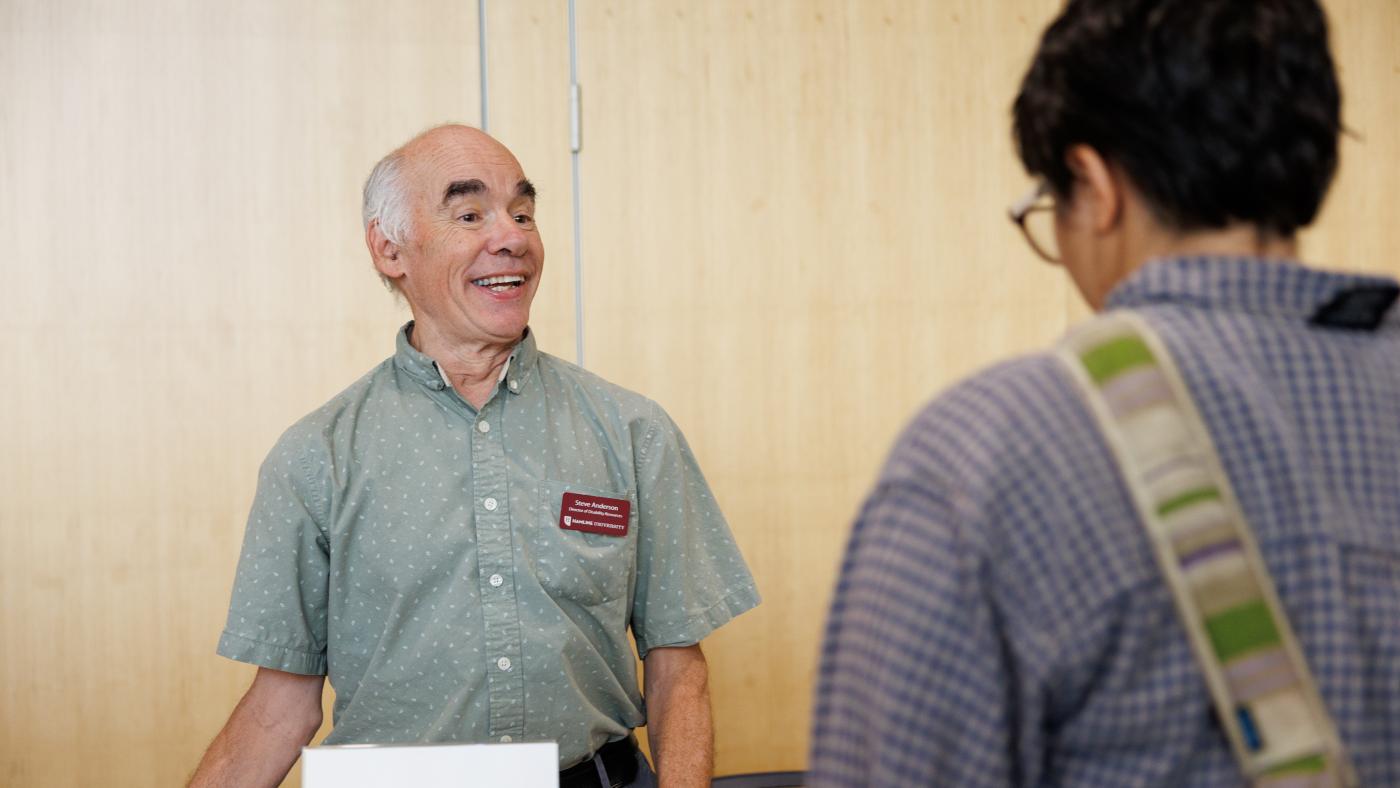
Disability resource advocates are seeing more students seeking support. About a fifth of Hamline University students used resources from the Office of Disability Resources in the last academic year.
For 12 years, Steve Anderson, director of Disability Resources, has been helping students with disabilities get access to the resources and accommodations they need to succeed. He sees accommodations as a way to level the playing field and create equitable opportunities for students.
“Disability is part of who you are,” Anderson says.
July is Disability Pride Month and we sat down with Anderson to discuss the office’s work and how students can access support services.
Question: What does disability pride mean to you as a university leader?
Anderson: Whether you're disabled or injured, disability pride means having confidence in yourself. I know students, especially first-year students, may need support, and that is part of who we are at Hamline.
For example, there may be universities that have changed the name of their offices from “Disability Resources” to “Access.” I pushed back on that because we are Disability Resources, and people are trying to remove the word “disability” from the name. Why? What I am trying to portray to my students is that you have a disability, and there is nothing to be ashamed of. It is part of who you are.
Question: What does the Disability Resources office do for students?
Anderson: We provide reasonable accommodations for students whether in the classroom setting or in a dormitory setting. These accommodations can be related to a documented disability, a short-term illness or injury, or another temporary need.
Question: What are some of the common accommodations?
Anderson: These accommodations support a wide range of disabilities, whether they are visible or invisible. Common accommodations include extended time on exams (typically time and a half), the options to take exams in our office’s testing rooms (rather than in the classroom) and extensions on some assignments. The services we provide are tailored to each student’s specific needs. I do it purposefully because two people can have the same diagnosis but require different types of support. Students will often come to me and ask, “What can I get?” I don’t operate that way. I tell them,“You’re the expert. You know yourself better than anyone.” It’s a very interactive process.
Question: What would you say to a student, staff or faculty member who feels too nervous or embarrassed to ask for help?
Anderson: I try to make this process as painless as possible because I know there can still be a stigma around asking for support. We are a resource — a resource for students, faculty and staff. I am keenly aware of the hesitation they may feel when coming into the office and I try to make them as comfortable as possible. We don’t give students an advantage over anyone else; we are simply leveling the playing field so they can have the support they need to succeed.
Question: What approach do you take to try and alleviate the stigma around asking for help around disability services?
Anderson: I think it starts with just being myself. One thing I don’t do is solicit business. I’ve had faculty and staff come to me and say they have a student who they think could really use my help. I don’t want to make assumptions or approach a student by telling them they have a disability when they may simply be having a difficult day or week.
If faculty and staff notice a student struggling, they can let them know there are resources available to them through the Office of Disability Resources and allow them to decide whether they want to take that next step.
Question: How can Pipers be better allies?
Anderson: Our university community is very inclusive and accepting. When you are planning an event or activity, ask yourself, “Is this accessible for everyone?” If it is not, make it so that it is!
Question: How can students sign up for accommodations?
Anderson: They can come to our office in West Hall, Room 108. They can also contact me and I’ll send them a link to schedule an appointment, or they can find more information on our website. We’ll talk about what our office does and we will address what they need.