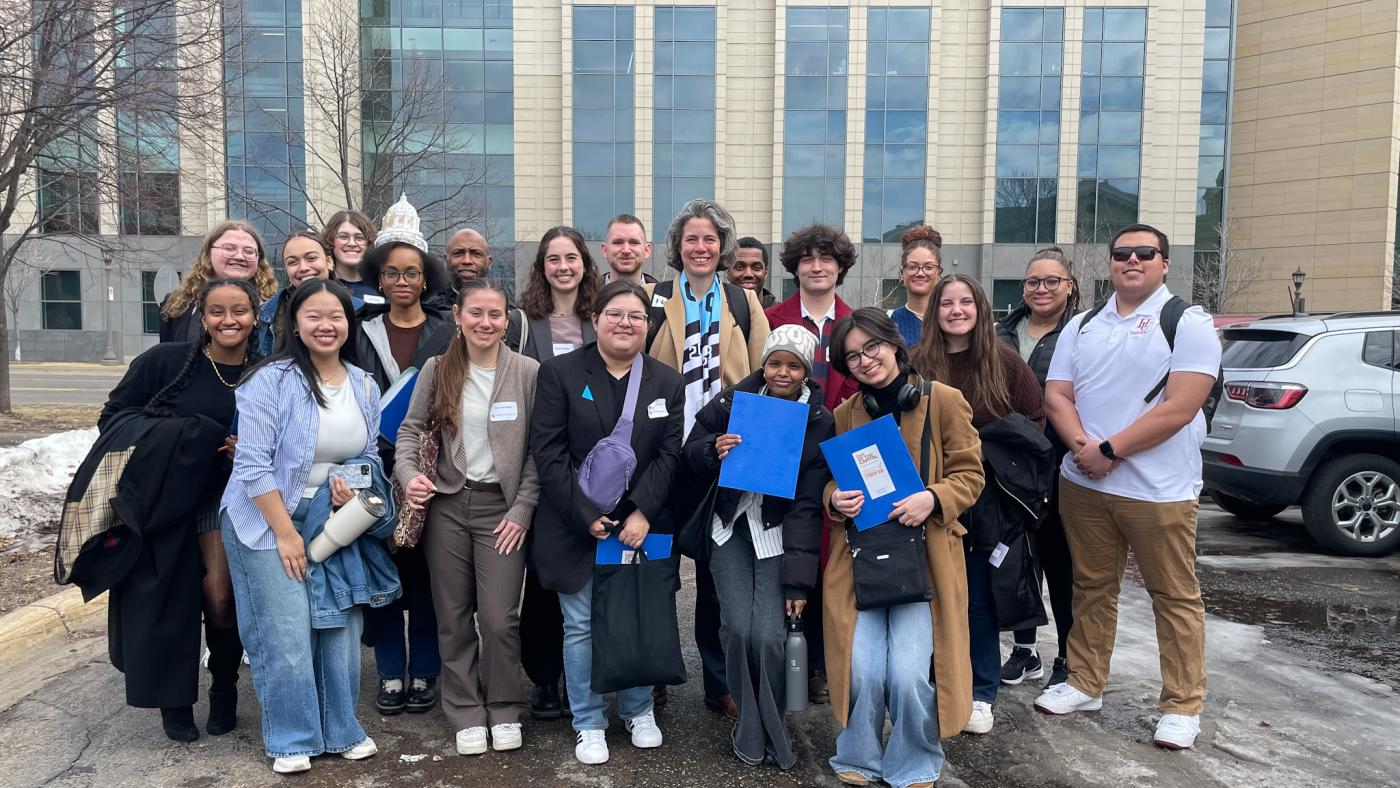
Eighteen Hamline University students met with legislators last week to advocate for the Minnesota State Grant program which is currently running a $131 million shortfall.
The State Grant provides need-based funding to low-and middle-income students attending eligible private nonprofit colleges, public universities and tribal institutions statewide.
More than 75,000 Minnesota residents receive a State Grant each year to help cover college costs. Without new funding, students’ awards for the 2026-27 academic year will need to be cut by more than 30%, according to the Minnesota Private College Council (MPCC).
The Hamline students took a bus to St. Paul Tuesday to take part in the “Day at the Capitol” event organized by the MPCC. The group’s trip was part of a larger advocacy effort that drew students from around the state.
Shayla Thao, ’29, computational data science and neuroscience major, participated in the event for the first time. After learning about the event’s purpose, she said she felt compelled to get involved.
“I am going out of my comfort zone and doing this, because I know my younger siblings are going to need this in the future, too,” she said.
Aiyana Cleveland, ’27, an education major with a concentration in special education and a minor in graphic design, and Alexi Schneider, ’28, forensic science major with a concentration in forensic biology, participated in the advocacy initiative for the second time. Both expressed concerns about how cuts could impact their education and the futures of others who depend on the support.
“If this funding is cut some [students] may push off college ‘til they are able to pay the tuition, or worse, have to drop out,” Cleveland said. “College is expensive and for lower-and-middle-income students, it's extremely difficult to attend without scholarships and grants.”
Schneider added, “Losing this support would make it even harder for students to afford their education, which is unfair. Many students would have to take on multiple jobs just to make up for the reduction in their loans.”
Throughout the day, students shared their personal stories with their legislators to emphasize the importance of the funding. Cleveland shared her experience as a first–generation, Indigenous student.
“One key story I shared was how this funding has helped me a lot,” she said. “I'm part of the 54% of students of color who benefit from this support. It helps alleviate some of the stress when it comes to paying tuition.”
Schneider echoed this perspective, reflecting on how lawmakers may not always understand the personal value of funding.
“Lawmakers are so focused on their jobs that they don’t always see the personal impact it has on people,” Schneider said. “I think hearing these experiences that aren’t their own really gives them a different perspective on certain issues.”
“I hope he [my legislator] understands what the State Grant really means to students who specifically rely on grants like these,” Schneider said. “If it wasn’t for this grant, I wouldn’t have this opportunity to go to college. I’m very grateful to be here.”
The meetings typically lasted about 10 minutes, and often took place in Capitol halls or designated rooms. Students met with the legislators who represent them, in small groups, sometimes with students from other institutions. Hamline University President Mayme Hostetter also attended the event, checking in with students as they advocated for themselves, fellow Pipers and the students at other institutions.
Students said that supporting higher education benefits individuals and society as a whole.
“Students are the future,” said Izzy Mayaka, ’28, a double major in social justice and social change and legal studies with a graduate paralegal certificate and a minor in ethics and advocacy. “Needing more money to support students going to school is nothing but a good thing. It means more people are going to school, more people are invested in higher education, and it opens doors to innovation we haven’t seen before.”