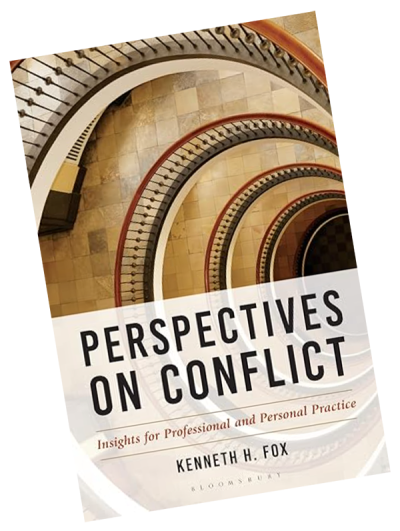
A question-and-answer session with Professor Ken Fox
What does conflict tell us?
Conflict brings out genuineness. Conflict is, in some ways, the real person coming through. Often when we work with people in conflict, we start with what we see — their behavior. What we often neglect is asking, "Where is it coming from?"
You offer six perspectives to understand conflict. How can they help?
We do what we do for a reason. We need to understand what that reason is — why we’re doing it. To more fully understand the reason behind my choices, I need to understand how to look at it. The six perspectives give people enough of a clue that they understand how to inquire. It’s not that they have all the answers, but they know what questions to ask.
What role does reflection play?
When we’re trying to learn how to more constructively engage our partners, kids, friends and colleagues, it’s important to be aware of how we are contributing to the conflict that we’re blaming others for. How do you shift from "I’m right and you’re wrong" to "We’re in something together. How can we shift the dynamic from something destructive to something constructive so we can work through the conflict together?" We often assume the conflict is about some "thing." That may be part of it, but really it’s about our ability to interact constructively about that thing.
It feels like a high-conflict era. What gives you hope?
I believe people try to do what’s right based on what they know and have experienced in their own lives. The more we can know, and the more we can know about ourselves, then the broader the boundaries and the wider the range of ways we have available to navigate our social lives. This is where conflict work bridges into civic education work and citizenry. Conflict is a part of life.
What’s next for you?
I’m going to retire from Hamline at the end of this academic year. I’ve been approved by the Fulbright Specialist Program to serve on its roster of specialists in the field of Peace and Conflict Resolution. I’m also in discussions with two universities to partner in curriculum development and teaching in the Czech Republic.