In a time when meaningful dialogue can feel increasingly difficult, dialogue has emerged as a core strategy to improve campus culture, climate and connection.
David Everett, vice president for inclusive excellence, kicked off the first event of the 2026 Community Roundtable series, ”Engaging and Learning Across Differences.” The discussion, on Feb. 19, focused on how Americans perceive political differences. Faculty, staff and students were invited to join the conversation.
“We want to make sure we engage with difference, with different perspectives, and different experiences,” Everett said.
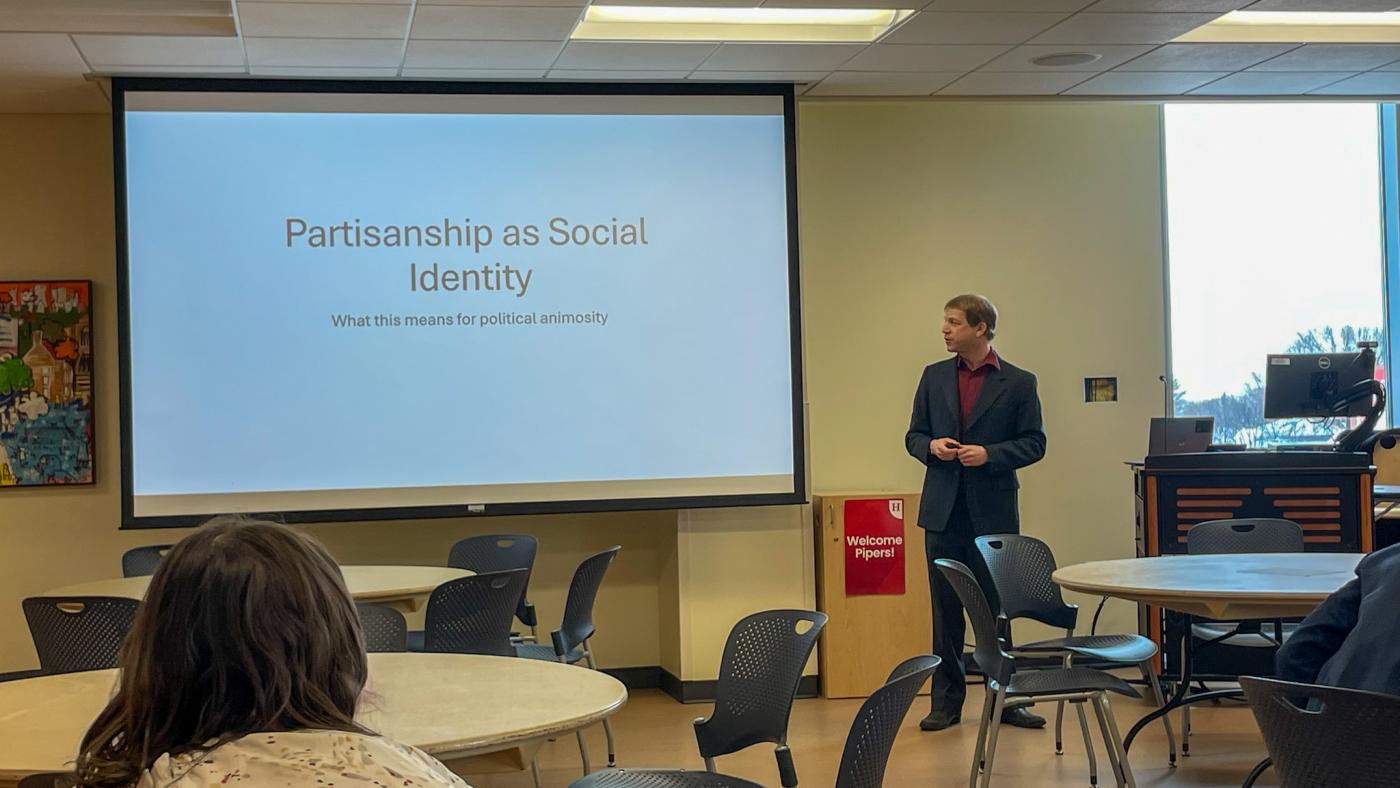
The roundtable featured a presentation on the psychological dynamics that shape political dialogue led by C. Daniel Myers, an associate professor of political science at the University of Minnesota. Myers explained that political affiliation is more than a choice; it’s a social identity, similar to being part of a family, team or community.
“If we think about partisanship as a social identity, we can understand why it can be hard to talk across lines of political differences,” he said.
Participants reflected on the groups they identify with and considered how those affiliations influence their reactions to news and political statements.
Three takeaways from the presentation were:
- Political identity shapes dialogue.
- Awareness of motivated reasoning matters.
- Shared identities and vulnerability build connections.
Political identity shapes dialogue
Partisanship influences not just what we believe, but how we process
information and interact with others. Recognizing that political views are tied to personal identity can help explain why conversations about politics often feel emotional, Myers said.
Awareness of motivated reasoning matters
People naturally interpret facts in ways that protect their group's perspective, Myers said.
“When you encounter information that is threatening to your group, you are going to use your cognitive resources to try and find reasons to discount that information,” he said.
Being aware of these reactions can help an individual approach conversations more thoughtfully and critically.
Shared identities and vulnerability build connection
Focusing on common goals and being willing to share openly can help bridge divides.
“There’s nothing wrong with being less vulnerable, but the more we are able to be vulnerable and share, the more we are able to connect those rooms," Myers said.
Taking a moment to think about shared values or community connections can make conversations easier and less tense.
After the presentation, participants engaged in small group discussions, sharing reflections on their experience. Many talked about the challenges of navigating a polarized environment and the emotional impact of current events. The conversations highlighted how important it is to pause, reflect and consider different perspectives when engaging in dialogue.
Those who missed this conversation will have two more chances to join the series. The next roundtable event, focusing on religious differences, will take place on March 19.