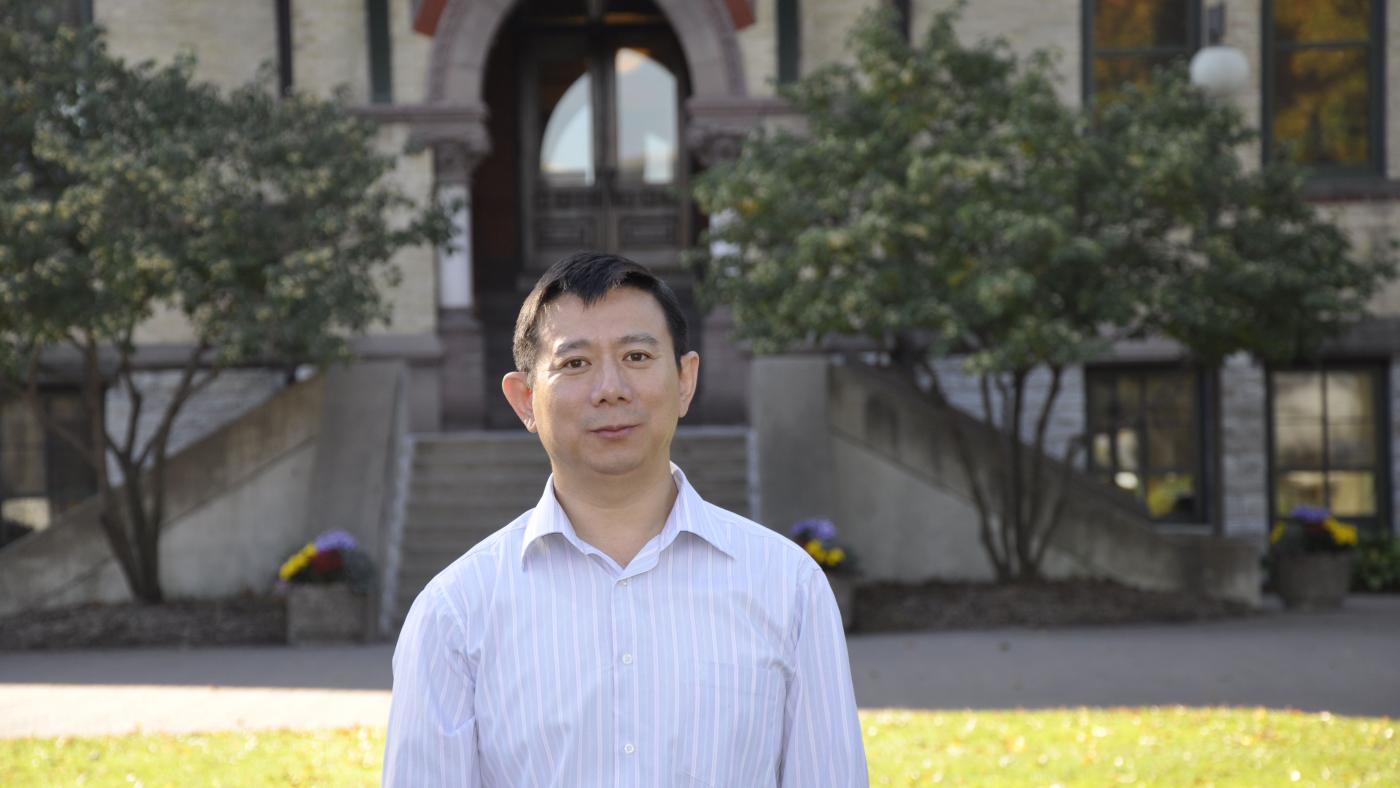
Lifeng Dong, the Emma K. and Carl R. N. Malmstrom Endowed Chair in Physics, is advancing next-generation desalination technologies through ongoing collaboration with researchers at Qingdao University of Science and Technology in China to advance next-generation desalination technologies.
Their work explores innovative solutions—including reverse osmosis membranes, biomimetic materials for water distillation and electrodialysis desalination—to address the world’s growing freshwater challenges. As global demand for clean water increases due to population growth, climate change and urbanization, sustainable drinking water and efficient water use in industry and agriculture have become vital priorities. Advanced membrane-based desalination has emerged as a leading strategy to meet these needs.
Professor Dong recently presented the team’s latest results, “Self-Healing Nanocontainer-Embedded Polyamide Membranes for Enhanced Chlorine Resistance and Desalination Performance,” at the 7th International Conference on Desalination Science and Technology, held Nov. 16–20 in Clearwater, Fla.
The research has been published in several leading peer-reviewed journals, including Desalination, Separation and Purification Technology, Chemical Engineering Journal and the Journal of Membrane Science.
Dong currently works with his collaborators and undergraduate students to design, synthesize, construct, and characterize nanoscale materials and devices — including solar cells, fuel cells, supercapacitors, and lithium batteries — for energy conversion and storage, as well as water purification and desalination. More information can be found at Hamline University Renewable Energy and Environmental Research (REER) Laboratory.